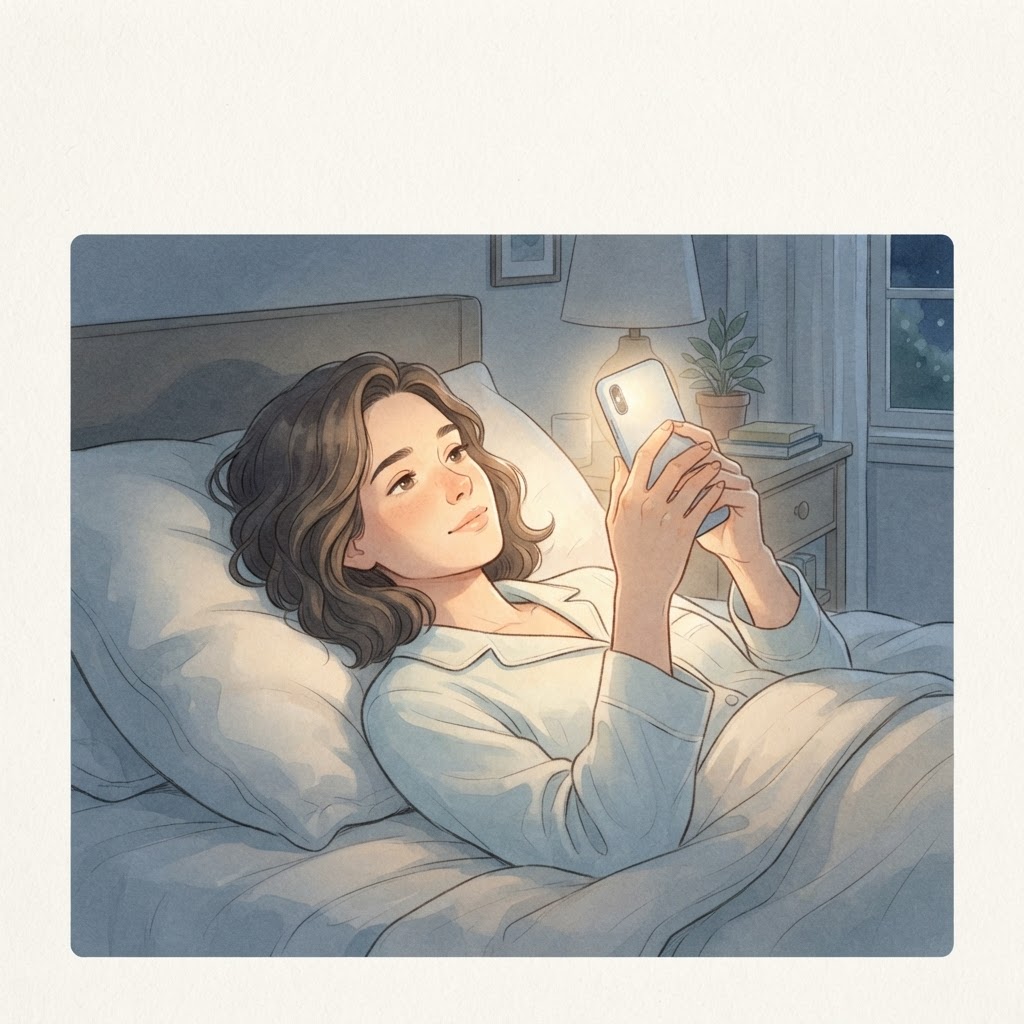
I can't stop scrolling at night
You know you should sleep, but you keep finding one more thing to do.
Educational information — not medical advice. Talk to your care team about what's right for you.
Overview
Common Causes
- A day with no protected downtime — sleep procrastination as 'revenge' for a schedule that felt out of your control.
- Infinite-scroll design that exploits the brain's reward system with endless novelty.
- Blue light and cognitive stimulation from devices that delay melatonin and arousal wind-down.
- Difficulty transitioning — the 'one more thing' loop that never finds a natural stopping point.
- Anxiety about the next day that makes delaying sleep feel like delaying tomorrow.
What You May Be Experiencing
- Going to bed an hour or more later than you intended, night after night.
- Feeling unable to stop even when you're exhausted and aware of the cost.
- Losing track of time on your phone, often with no memory of what you consumed.
- Morning regret that dissolves by evening, when the cycle restarts.
- Chronic sleep debt and daytime fatigue that you attribute to 'bad habits.'
Dr. Morse's Approach
Treatment Options
A 'digital sunset' with a hard device cutoff, scheduled wind-down, and friction on late-night apps.
Protecting genuine downtime earlier in the day so the evening doesn't carry the whole burden of autonomy.
Usually not indicated; address underlying anxiety or mood if procrastination is driven by avoidance.
Your Night-time Routine
A practical, step-by-step wind-down built around this concern's specific drivers. Follow it consistently for two to three weeks — rhythm, not perfection, is what resets sleep.
- 18:00 PM
Plug your phone into its charger in another room — out of reach, out of pocket.
- 28:15 PM
Choose one analog wind-down activity: a book, a podcast, a bath, or journaling.
- 38:45 PM
Dim the lights to signal the day is ending — your brain needs the cue as much as your body.
- 49:15 PM
Set a gentle alarm for 'lights out' so the decision is made once, in daylight, not at midnight.
- 59:30 PM
Lights out. If you need entertainment, use an audiobook with a sleep timer — eyes closed, no scrolling.
Take this guide home
A printable PDF of this concern's full overview, routine, and treatment options.
Related Articles
Articles on this concern are being written. Check back soon, or browse the full Sleep Laboratory.
When to Seek Help
Educational — Not Medical Advice
This content is provided for general educational purposes only and does not constitute medical advice, diagnosis, or treatment. It is not a substitute for consultation with a qualified healthcare professional. Submitting a question or receiving a reply does not establish a doctor-patient relationship. Always seek the advice of your physician or other qualified health provider with any questions about a medical condition, and discuss any changes to your care with your own care team.
Ready for personalized guidance?
Dr. Morse offers one-on-one and group coaching to help you move from understanding your sleep concern to changing it. Share what you're experiencing and she'll be in touch.
Request a Coaching Consultation