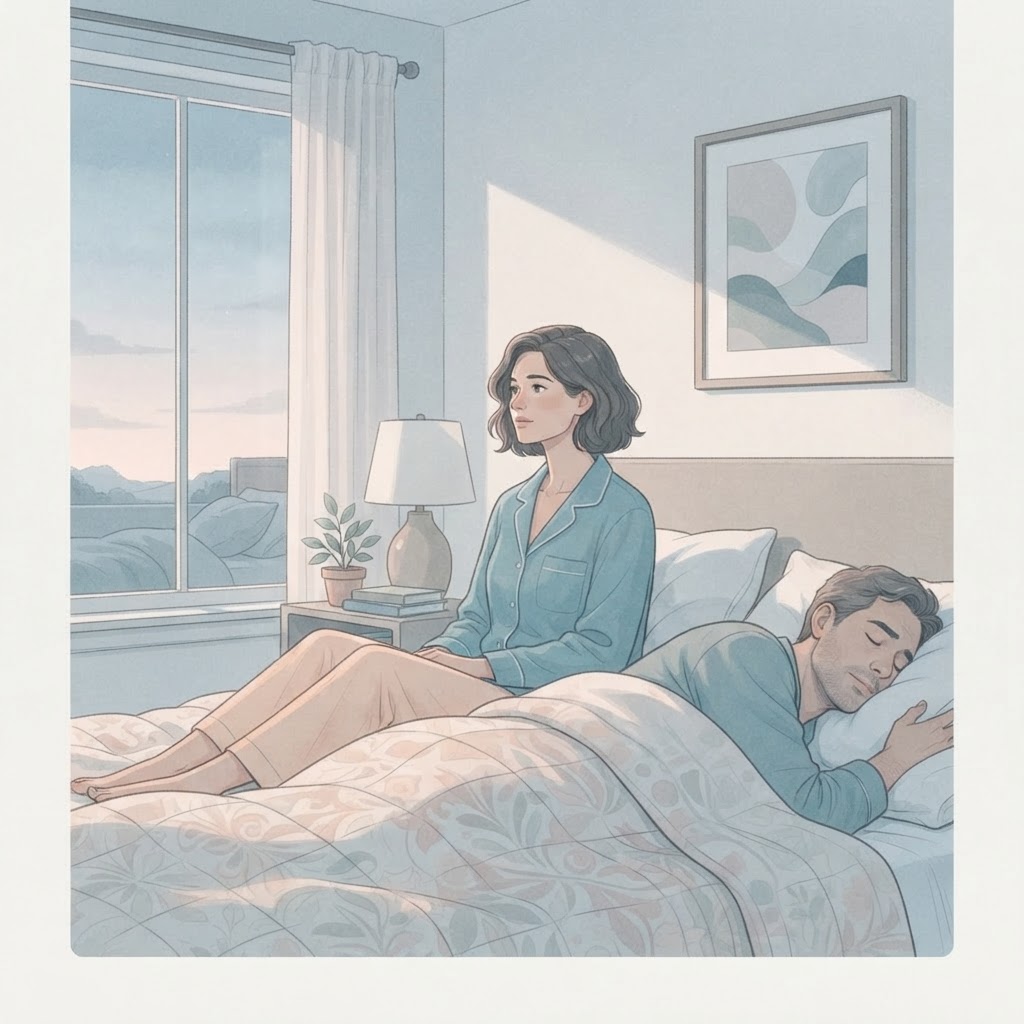
I wake far too early
You wake at 4 or 5 a.m. and cannot get back to sleep.
Educational information — not medical advice. Talk to your care team about what's right for you.
Overview
Common Causes
- Depression, which classically presents with early-morning awakening.
- A shifted circadian rhythm (advanced sleep phase) that moves the sleep window earlier than desired.
- Morning cortisol rising too early, pulling the brain toward wakefulness prematurely.
- Alcohol, which fragments the second half of the night and produces early waking as it clears.
- Age-related changes in sleep architecture that thin and shorten the sleep cycle.
What You May Be Experiencing
- Waking at a consistent early hour — often 4–5 a.m. — regardless of bedtime.
- Inability to return to sleep despite feeling unrefreshed.
- A flat or low mood in those early hours, with rumination that won't quiet.
- Daytime fatigue that improves slightly as the day goes on.
- Sleep that 'ends' before it feels complete.
Dr. Morse's Approach
Treatment Options
CBT-I with sleep compression, and bright light therapy timed to re-anchor a shifted rhythm.
Consistent wake time, evening light management, and removing alcohol's late-night fragmentation.
Evaluation for depression, circadian disorders, or medical contributors, with treatment directed at the root cause.
Your Night-time Routine
A practical, step-by-step wind-down built around this concern's specific drivers. Follow it consistently for two to three weeks — rhythm, not perfection, is what resets sleep.
- 1On waking early
Do not check the time or lie in frustration. If awake after 20 minutes, move to a dim, calm activity.
- 2Morning
Get bright outdoor light at your desired wake time to anchor the rhythm where you want it.
- 36:00 PM
No alcohol — its metabolism is a leading cause of early waking.
- 48:00 PM
Dim the lights; avoid bright evening light that could be advancing your clock earlier.
- 510:00 PM
Protect a consistent bedtime; do not go to bed too early to 'compensate' — it worsens the early wake.
Take this guide home
A printable PDF of this concern's full overview, routine, and treatment options.
Related Articles
Articles on this concern are being written. Check back soon, or browse the full Sleep Laboratory.
When to Seek Help
Educational — Not Medical Advice
This content is provided for general educational purposes only and does not constitute medical advice, diagnosis, or treatment. It is not a substitute for consultation with a qualified healthcare professional. Submitting a question or receiving a reply does not establish a doctor-patient relationship. Always seek the advice of your physician or other qualified health provider with any questions about a medical condition, and discuss any changes to your care with your own care team.
Ready for personalized guidance?
Dr. Morse offers one-on-one and group coaching to help you move from understanding your sleep concern to changing it. Share what you're experiencing and she'll be in touch.
Request a Coaching Consultation