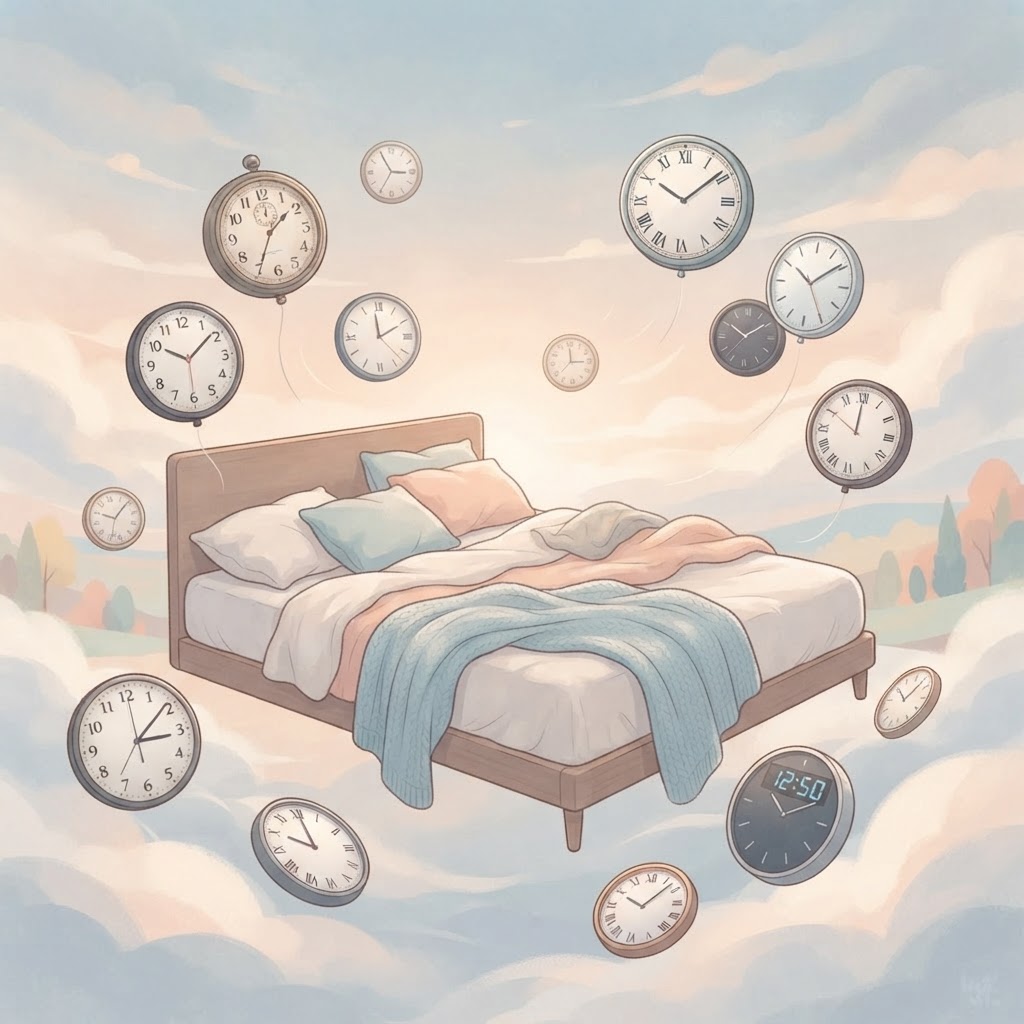
My sleep timing is all over the place
No consistent bedtime or wake time — your rhythm never anchors.
Educational information — not medical advice. Talk to your care team about what's right for you.
Overview
Common Causes
- A lifestyle without fixed wake or sleep times (freelance, student, retired).
- Weekend 'recovery' sleep that shifts the rhythm by hours.
- Social and work demands that vary day to day.
- Napping at inconsistent times that fragments night sleep.
- Self-reinforcing drift — late nights lead to late wake, which leads to later nights.
What You May Be Experiencing
- Bedtime and wake time that vary by hours from day to day.
- Difficulty falling asleep on 'early' nights and difficulty waking on 'early' mornings.
- Sleep that feels adequate some days and poor others.
- Daytime energy that swings unpredictably.
- A sense that your body has 'no clock.'
Dr. Morse's Approach
Treatment Options
A consistent wake time seven days a week — the single most powerful circadian anchor.
Morning light exposure, limiting weekend drift, and a consistent wind-down regardless of bedtime.
Rarely needed; address underlying insomnia or circadian disorders if consistency alone is insufficient.
Your Night-time Routine
A practical, step-by-step wind-down built around this concern's specific drivers. Follow it consistently for two to three weeks — rhythm, not perfection, is what resets sleep.
- 1Every morning
Wake at the same time every day, including weekends — this is the anchor that makes everything else work.
- 2On waking
Get bright light immediately; it locks the anchor into your biology.
- 3Evening
Begin dimming lights 1–2 hours before your target bedtime; let sleepiness, not the clock, guide the exact time.
- 4Bedtime
Go to bed when sleepy, but wake at the fixed time regardless — consistency of wake matters more than consistency of bed.
- 5Weekends
Keep wake time within an hour of weekdays; large weekend drift resets the whole rhythm.
Take this guide home
A printable PDF of this concern's full overview, routine, and treatment options.
Related Articles
Articles on this concern are being written. Check back soon, or browse the full Sleep Laboratory.
When to Seek Help
Educational — Not Medical Advice
This content is provided for general educational purposes only and does not constitute medical advice, diagnosis, or treatment. It is not a substitute for consultation with a qualified healthcare professional. Submitting a question or receiving a reply does not establish a doctor-patient relationship. Always seek the advice of your physician or other qualified health provider with any questions about a medical condition, and discuss any changes to your care with your own care team.
Ready for personalized guidance?
Dr. Morse offers one-on-one and group coaching to help you move from understanding your sleep concern to changing it. Share what you're experiencing and she'll be in touch.
Request a Coaching Consultation