Travel ruins my sleep
Jet lag that leaves you awake at night and foggy by day.
Educational information — not medical advice. Talk to your care team about what's right for you.
Overview
Common Causes
- Rapid travel across multiple time zones that outpaces the circadian rhythm's natural adjustment rate.
- Exposure to light at the wrong times, which anchors the clock to the old zone.
- Dehydration, alcohol, and cabin pressure effects that compound the disruption.
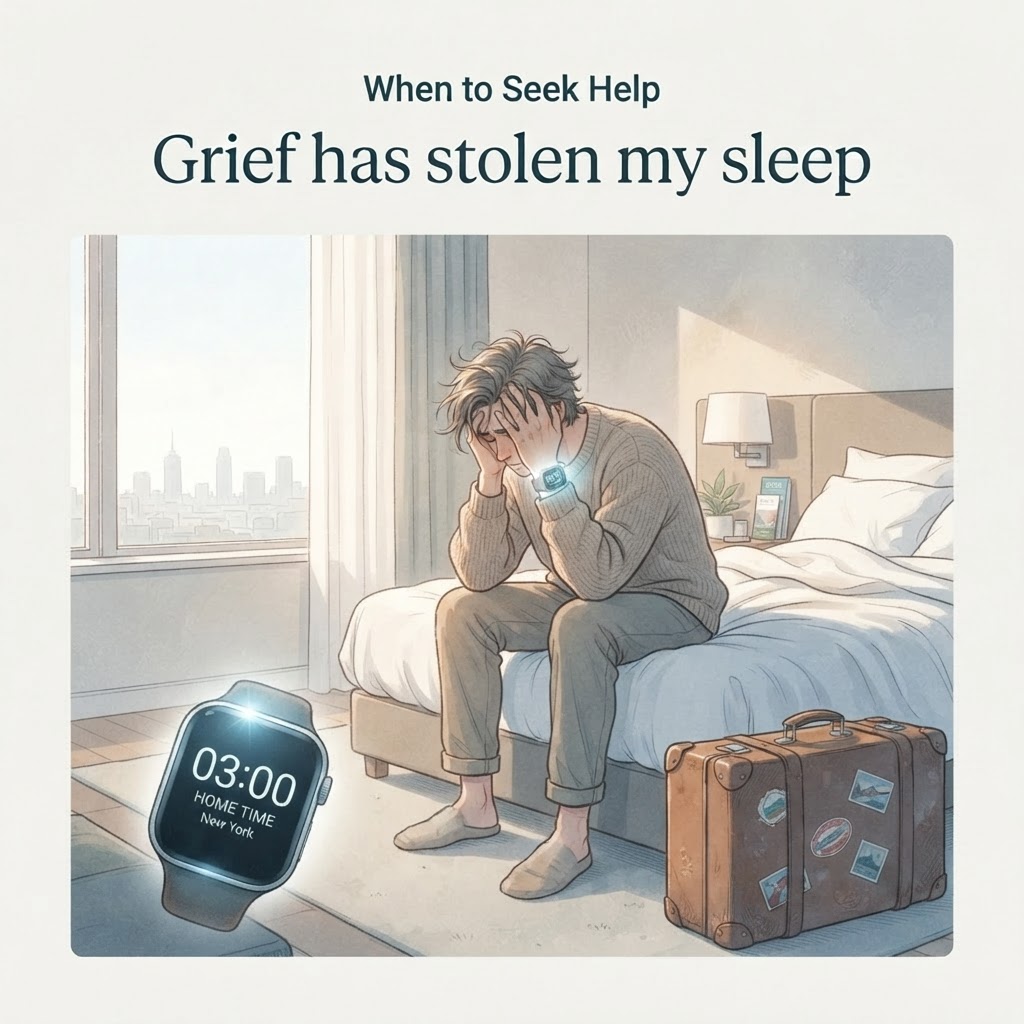
- A tendency to stay on 'home time' socially or through screen use.
What You May Be Experiencing
- Insomnia at the destination's night and sleepiness during the destination's day.
- Grogginess, poor concentration, and reduced performance for several days.
- Digestive upset and reduced appetite on the new schedule.
- Mood changes and a general sense of being 'off.'
- Worse symptoms traveling east (advancing the clock) than west.
Dr. Morse's Approach
Treatment Options
Strategic light and dark exposure timed to the destination; immediate adoption of local sleep and meal times.
Hydration, avoiding alcohol on the flight, and a pre-travel gradual shift for important trips.
Short-term, timed melatonin under guidance to help shift the clock; targeted support for sleep on arrival.
Your Night-time Routine
A practical, step-by-step wind-down built around this concern's specific drivers. Follow it consistently for two to three weeks — rhythm, not perfection, is what resets sleep.
- 1On arrival
Seek morning light at the destination and avoid it in the evening to anchor the new rhythm.
- 2Local bedtime
Sleep at the destination's bedtime, not home time; use a dark, cool room.
- 3If you wake early
Avoid bright light and screens until the local morning; dim light only.
- 4Daytime
Stay outdoors and active during local daylight hours; avoid naps longer than 20 minutes.
- 5For eastward travel
Begin shifting bedtime earlier by 30–60 min per day for several days before departure if possible.
Take this guide home
A printable PDF of this concern's full overview, routine, and treatment options.
Related Articles
Articles on this concern are being written. Check back soon, or browse the full Sleep Laboratory.
When to Seek Help
Educational — Not Medical Advice
This content is provided for general educational purposes only and does not constitute medical advice, diagnosis, or treatment. It is not a substitute for consultation with a qualified healthcare professional. Submitting a question or receiving a reply does not establish a doctor-patient relationship. Always seek the advice of your physician or other qualified health provider with any questions about a medical condition, and discuss any changes to your care with your own care team.
Ready for personalized guidance?
Dr. Morse offers one-on-one and group coaching to help you move from understanding your sleep concern to changing it. Share what you're experiencing and she'll be in touch.
Request a Coaching Consultation