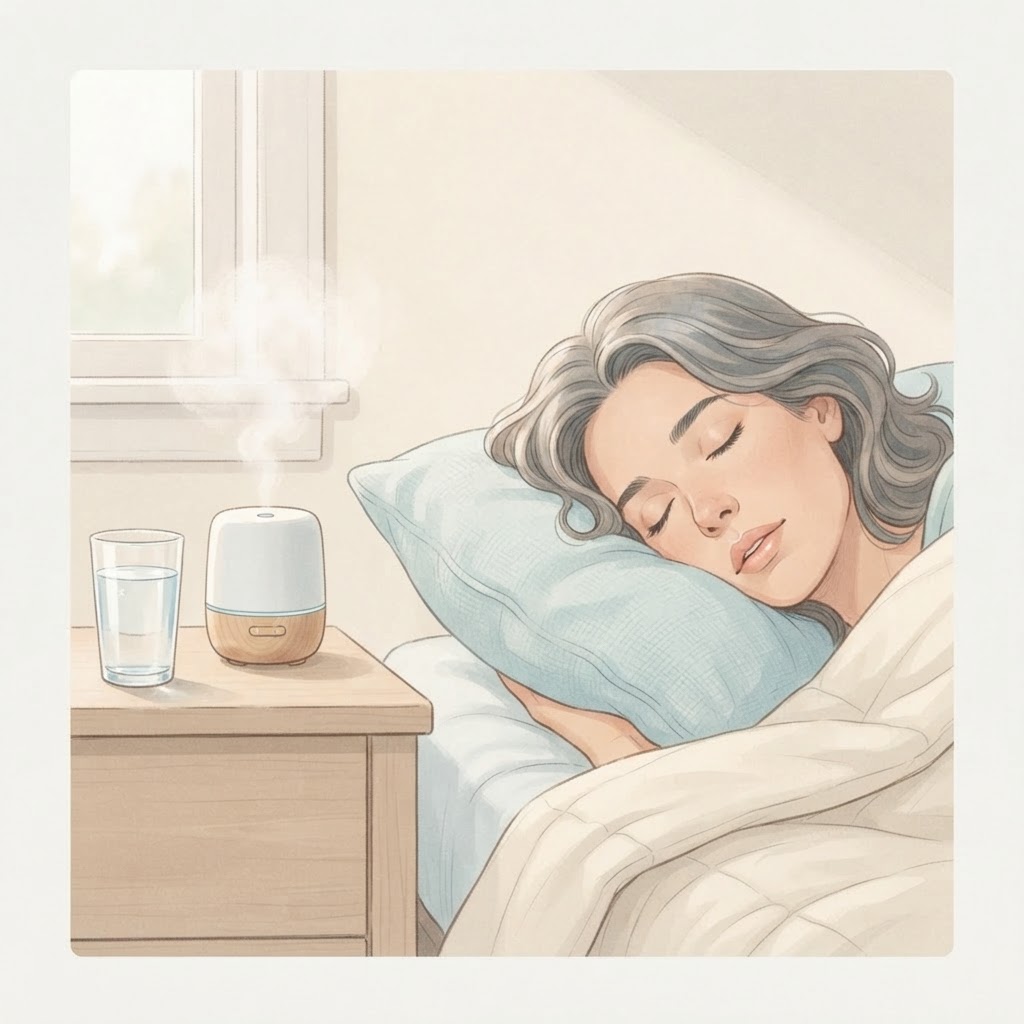
I breathe through my mouth
Mouth breathing at night is drying you out and disturbing your sleep.
Educational information — not medical advice. Talk to your care team about what's right for you.
Overview
Common Causes
- Chronic nasal congestion from allergies, anatomy, or inflammation.
- Deviated septum or structural nasal obstruction.
- Habitual mouth breathing that persists even when the nose is clear.
- Alcohol or sedatives that relax the jaw and increase mouth opening.
- Undiagnosed sleep-disordered breathing that opens the mouth to compensate for a narrowed airway.
What You May Be Experiencing
- Waking with a persistently dry mouth and sore throat.
- Bad breath or dental issues linked to nighttime dryness.
- Snoring that is worse when the mouth is open.
- A partner noticing mouth breathing or gasping during sleep.
- Feeling unrefreshed despite seemingly adequate sleep hours.
Dr. Morse's Approach
Treatment Options
Nasal breathing retraining and, when appropriate, gentle mouth-taping protocols under guidance.
Saline nasal rinses, allergen management, and side-sleeping to support the airway.
Evaluation for nasal obstruction, allergies, or sleep-disordered breathing; treatment directed at the cause.
Your Night-time Routine
A practical, step-by-step wind-down built around this concern's specific drivers. Follow it consistently for two to three weeks — rhythm, not perfection, is what resets sleep.
- 17:00 PM
Saline nasal rinse to clear congestion and support nasal breathing overnight.
- 28:00 PM
Manage allergens in the bedroom — clean air, dust-mite covers, and a cool temperature.
- 39:00 PM
Sleep on your side; back sleeping worsens mouth opening and airway collapse.
- 49:30 PM
If guided by your clinician, apply a chin strap or mouth tape to encourage nasal breathing.
- 510:00 PM
Sleep. If you wake with a dry mouth, raise it with your clinician — it may be a sign of airway issues.
Take this guide home
A printable PDF of this concern's full overview, routine, and treatment options.
Related Articles
Articles on this concern are being written. Check back soon, or browse the full Sleep Laboratory.
When to Seek Help
Educational — Not Medical Advice
This content is provided for general educational purposes only and does not constitute medical advice, diagnosis, or treatment. It is not a substitute for consultation with a qualified healthcare professional. Submitting a question or receiving a reply does not establish a doctor-patient relationship. Always seek the advice of your physician or other qualified health provider with any questions about a medical condition, and discuss any changes to your care with your own care team.
Ready for personalized guidance?
Dr. Morse offers one-on-one and group coaching to help you move from understanding your sleep concern to changing it. Share what you're experiencing and she'll be in touch.
Request a Coaching Consultation