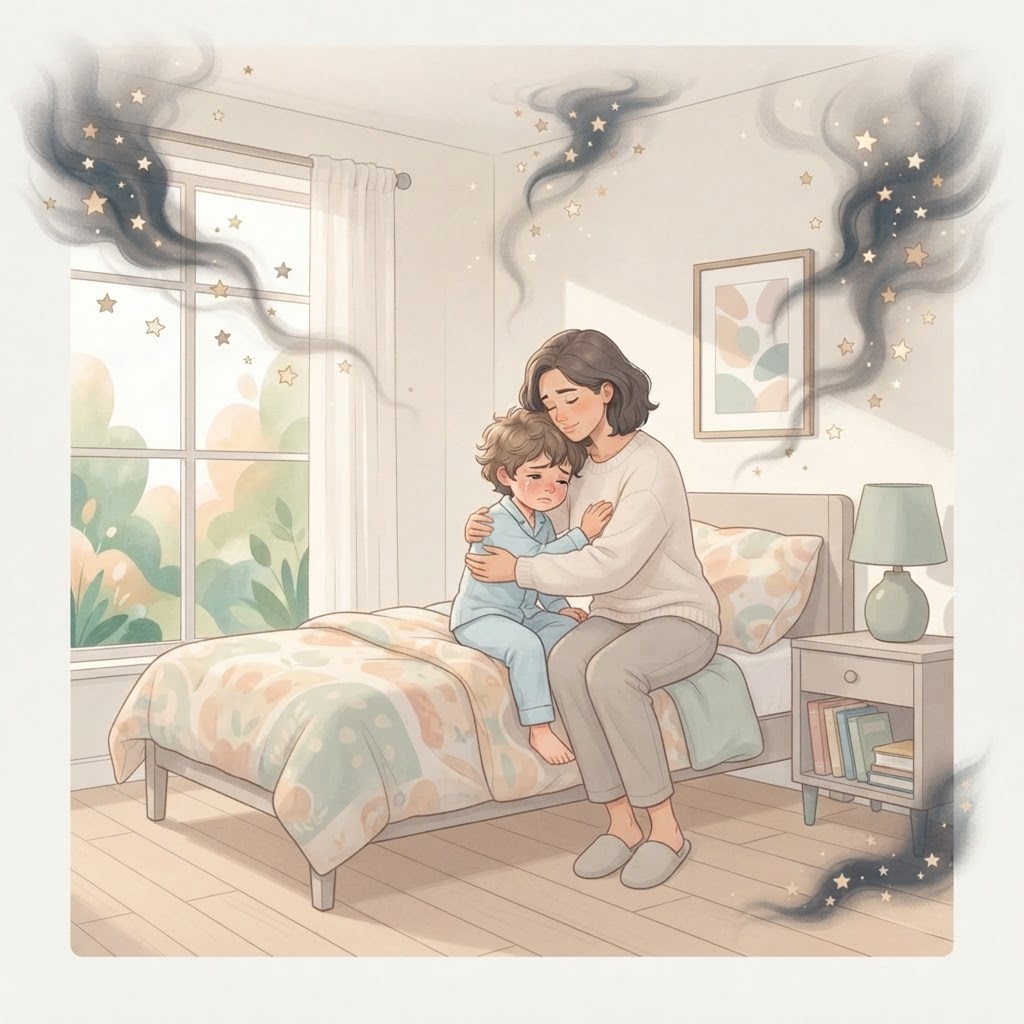
My child has nightmares
Frightening dreams and night waking that frighten the whole family.
Educational information — not medical advice. Talk to your care team about what's right for you.
Overview
Common Causes
- Developmental stage — both are common and usually outgrown.
- Stress, change, or emotional events that surface in sleep.
- Overtiredness or irregular sleep schedules that deepen sleep and trigger terrors.
- Fever or illness in young children.
- Frightening media or overstimulation close to bedtime.
What You May Be Experiencing
- Nightmares: waking fully, frightened, often late in the night, with a clear memory of the dream.
- Night terrors: apparent terror early in the night with no full waking and no memory the next day.
- Reluctance to go to bed for fear of the dreams returning.
- Disrupted sleep for the child and the whole family.
- Daytime tiredness or anxiety linked to the nighttime episodes.
Dr. Morse's Approach
Treatment Options
For nightmares: a calming routine and 'dream rewriting.' For night terrors: protect, don't wake, and address overtiredness.
Consistent, adequate sleep; calming pre-sleep activities; and avoiding frightening media before bed.
Evaluation if episodes are frequent, injurious, or accompanied by daytime anxiety, trauma, or developmental concerns.
Your Night-time Routine
A practical, step-by-step wind-down built around this concern's specific drivers. Follow it consistently for two to three weeks — rhythm, not perfection, is what resets sleep.
- 16:00 PM
Screens off; choose calm, non-frightening content only in the evening.
- 26:30 PM
A predictable, soothing wind-down — bath, pajamas, a gentle story.
- 37:00 PM
For recurring nightmares, practice 'rewriting' the dream to a safe ending during the day, not at bedtime.
- 47:15 PM
Lights out; protect adequate sleep, as overtiredness worsens both nightmares and terrors.
- 5If an episode occurs
Nightmare: comfort and reassure. Night terror: keep the child safe, do not try to wake them, and let it pass.
Take this guide home
A printable PDF of this concern's full overview, routine, and treatment options.
Related Articles
Articles on this concern are being written. Check back soon, or browse the full Sleep Laboratory.
When to Seek Help
Educational — Not Medical Advice
This content is provided for general educational purposes only and does not constitute medical advice, diagnosis, or treatment. It is not a substitute for consultation with a qualified healthcare professional. Submitting a question or receiving a reply does not establish a doctor-patient relationship. Always seek the advice of your physician or other qualified health provider with any questions about a medical condition, and discuss any changes to your care with your own care team.
Ready for personalized guidance?
Dr. Morse offers one-on-one and group coaching to help you move from understanding your sleep concern to changing it. Share what you're experiencing and she'll be in touch.
Request a Coaching Consultation