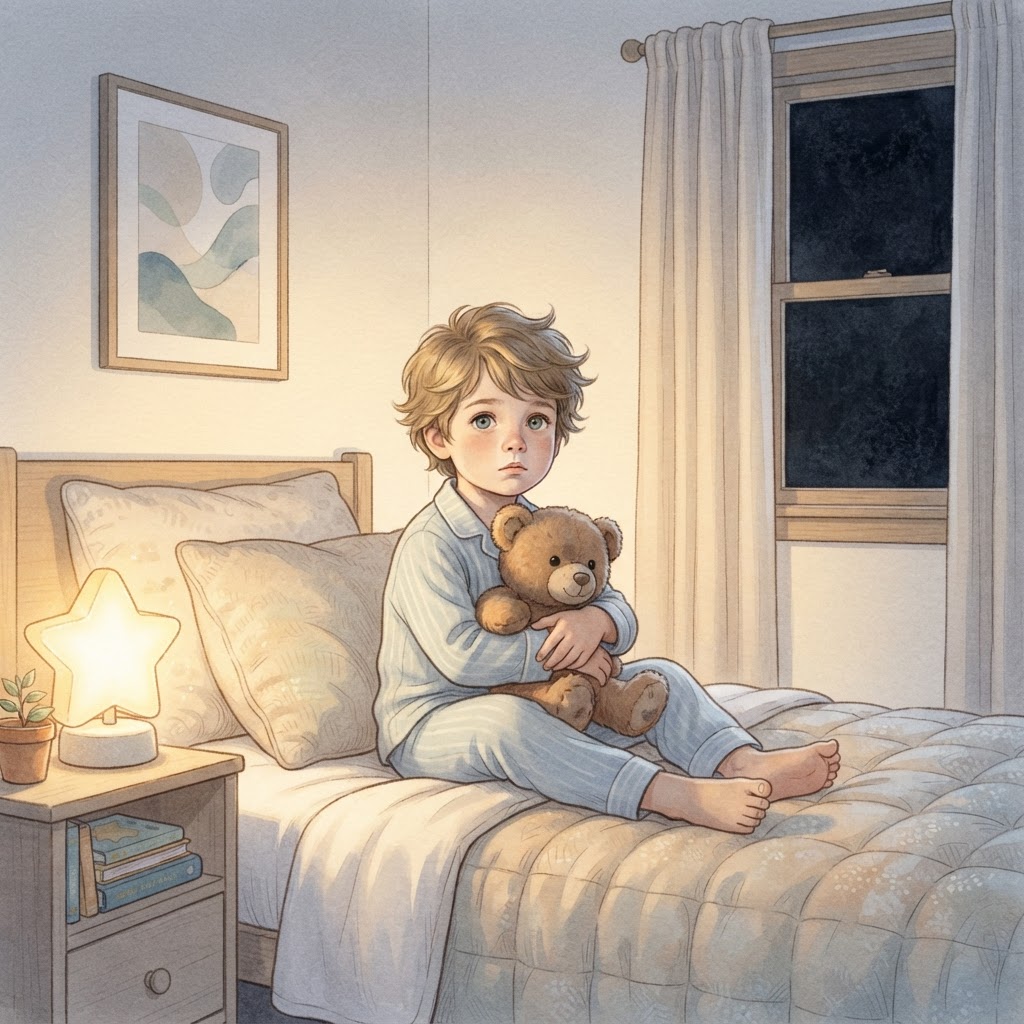
My child won't sleep
Establishing healthy sleep habits for children and adolescents.
Educational information — not medical advice. Talk to your care team about what's right for you.
Overview
Common Causes
- Developmental stage — infant sleep is naturally fragmented, and adolescent circadian rhythms shift later by biology, not choice.
- Inconsistent sleep schedules that prevent a stable rhythm from forming.
- Screen time and evening light, which delay melatonin and push sleep later.
- Behavioral associations — needing a parent, a feed, or a device to fall asleep, which then re-trigger awakenings overnight.
- Anxiety, school stress, or emotional changes that surface at bedtime.
What You May Be Experiencing
- Bedtime resistance, prolonged sleep onset, or repeated 'curtain calls' after lights out.
- Frequent night awakenings that require a parent's intervention.
- Difficulty waking for school, especially in adolescents.
- Daytime irritability, inattention, or behavioral changes linked to poor sleep.
- Snoring, mouth breathing, or restless sleep in a child.
Dr. Morse's Approach
Treatment Options
Age-appropriate bedtime routines, faded bedtime, and graduated steps toward independent sleep onset.
Consistent sleep-wake timing (even weekends), protected wind-down, and removing screens from the bedroom.
Evaluation for pediatric sleep apnea, restless legs, or circadian disorders when symptoms or exam findings suggest more than a behavioral pattern.
Your Night-time Routine
A practical, step-by-step wind-down built around this concern's specific drivers. Follow it consistently for two to three weeks — rhythm, not perfection, is what resets sleep.
- 16:30 PM
Family wind-down begins — screens off, lights low, the household shifts to calm.
- 27:00 PM
Bath, pajamas, and a predictable sequence in the same order every night.
- 37:15 PM
Story or quiet connection — a moment of warmth, not negotiation.
- 47:30 PM
Lights out while drowsy but still awake, so the child learns to fall asleep independently.
- 5Weekends
Keep wake and bed times within an hour of weekdays — drifting on weekends resets the whole rhythm.
Take this guide home
A printable PDF of this concern's full overview, routine, and treatment options.
Related Articles
Articles on this concern are being written. Check back soon, or browse the full Sleep Laboratory.
When to Seek Help
Educational — Not Medical Advice
This content is provided for general educational purposes only and does not constitute medical advice, diagnosis, or treatment. It is not a substitute for consultation with a qualified healthcare professional. Submitting a question or receiving a reply does not establish a doctor-patient relationship. Always seek the advice of your physician or other qualified health provider with any questions about a medical condition, and discuss any changes to your care with your own care team.
Ready for personalized guidance?
Dr. Morse offers one-on-one and group coaching to help you move from understanding your sleep concern to changing it. Share what you're experiencing and she'll be in touch.
Request a Coaching Consultation