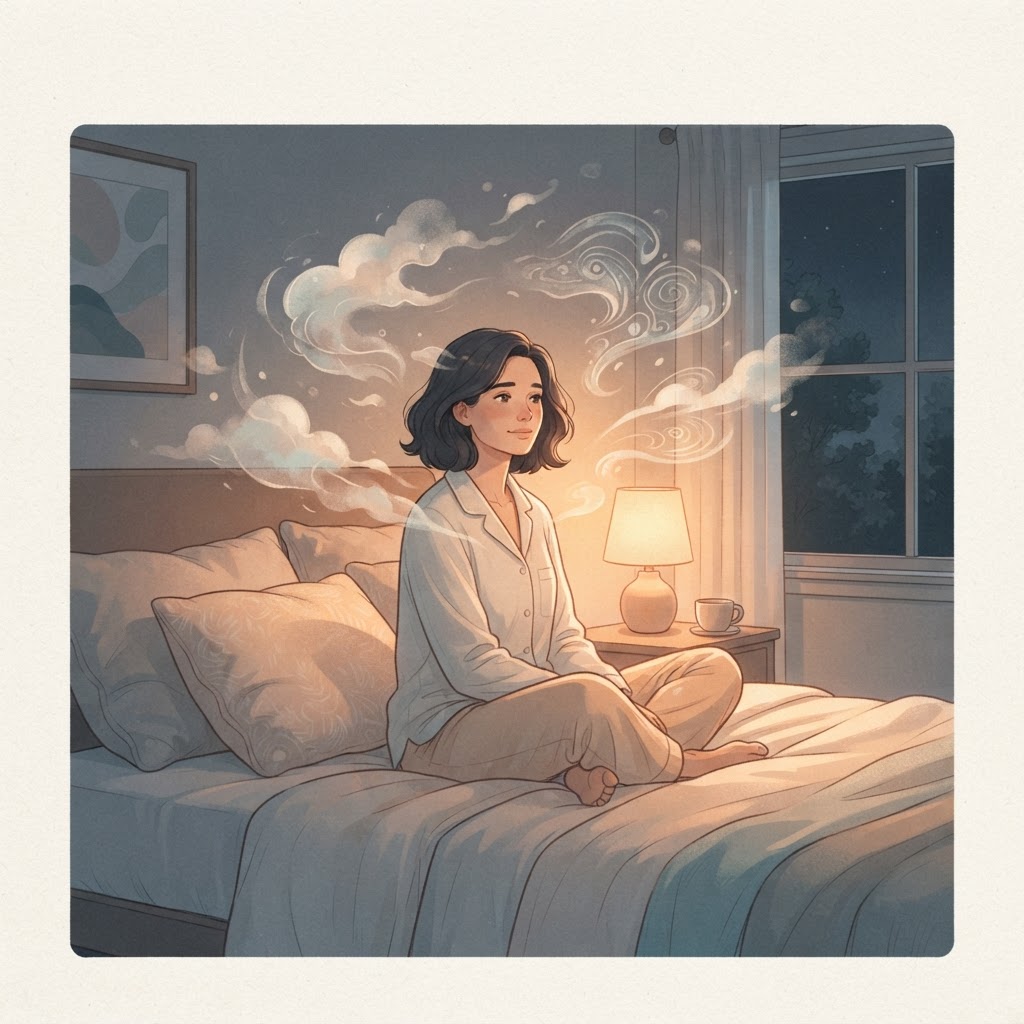
I can't stay asleep
Frequent awakenings throughout the night disrupt your rest.
Educational information — not medical advice. Talk to your care team about what's right for you.
Overview
Common Causes
- Heightened physiological arousal that lowers the threshold for waking during the night.
- Environmental disruptors — noise, temperature, light, or a partner's movements.
- Nocturia (frequent urination), which pulls you out of sleep repeatedly.
- Alcohol, which fragments the second half of the night as it metabolizes.
- Mood conditions such as depression and anxiety, which classically present with early-morning awakening.
What You May Be Experiencing
- Waking one or more times per night and struggling to return to sleep.
- Long periods awake in the middle of the night with a racing mind.
- Early-morning awakening with no ability to fall back asleep.
- Sleep that feels light, shallow, or 'half-awake.'
- Daytime tiredness despite having spent adequate time in bed.
Dr. Morse's Approach
Treatment Options
Stimulus control and sleep compression to strengthen sleep continuity and reduce time awake in bed.
Optimizing the sleep environment, managing fluids and meals before bed, and addressing alcohol's effect on late-night sleep.
Evaluation for underlying contributors — mood, pain, nocturia, or breathing — with treatment directed at the specific cause.
Your Night-time Routine
A practical, step-by-step wind-down built around this concern's specific drivers. Follow it consistently for two to three weeks — rhythm, not perfection, is what resets sleep.
- 16:00 PM
Limit fluids to reduce nighttime trips to the bathroom (nocturia).
- 27:00 PM
Last meal — avoid reflux triggers and heavy food close to bed.
- 38:00 PM
No alcohol — it fragments the second half of the night as it metabolizes.
- 49:00 PM
Cool, dark room with steady white noise or a fan to mask disruptive sounds.
- 510:00 PM
Sleep. If you wake and can't return within 20 minutes, move to a dim, quiet activity until sleepy — don't lie awake in frustration.
Take this guide home
A printable PDF of this concern's full overview, routine, and treatment options.
Related Articles
Articles on this concern are being written. Check back soon, or browse the full Sleep Laboratory.
When to Seek Help
Educational — Not Medical Advice
This content is provided for general educational purposes only and does not constitute medical advice, diagnosis, or treatment. It is not a substitute for consultation with a qualified healthcare professional. Submitting a question or receiving a reply does not establish a doctor-patient relationship. Always seek the advice of your physician or other qualified health provider with any questions about a medical condition, and discuss any changes to your care with your own care team.
Ready for personalized guidance?
Dr. Morse offers one-on-one and group coaching to help you move from understanding your sleep concern to changing it. Share what you're experiencing and she'll be in touch.
Request a Coaching Consultation