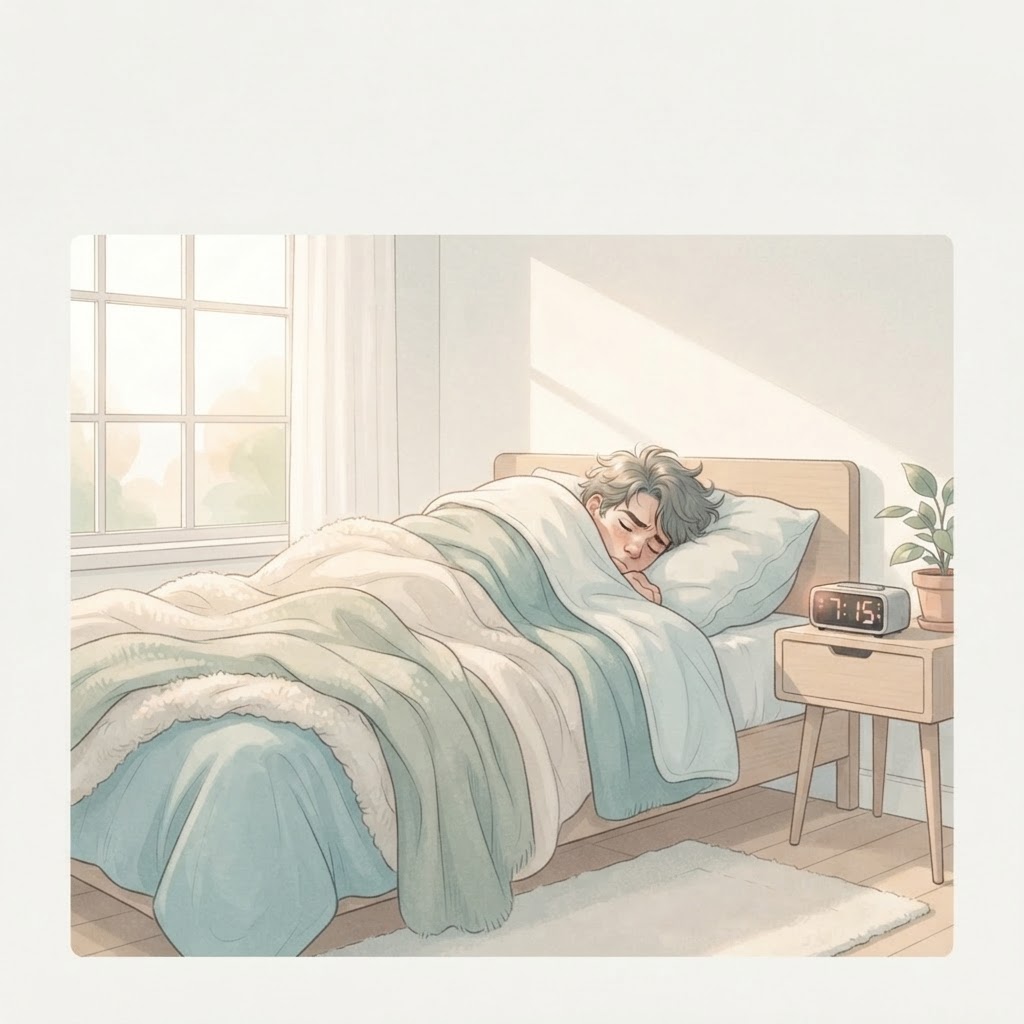
My teenager can't wake up
Late bedtimes and impossible mornings — biology is fighting the schedule.
Educational information — not medical advice. Talk to your care team about what's right for you.
Overview
Common Causes
- A biologically delayed circadian rhythm that pushes sleep onset and wake time later.
- Early school start times that cut directly across the teen's natural sleep window.
- Evening screen light that delays melatonin further.
- Academic and social pressures that push bedtime later.
- Caffeine use to compensate for sleep debt, which then worsens the next night's sleep.
What You May Be Experiencing
- Extreme difficulty waking on school mornings, often with irritability or grogginess.
- Inability to fall asleep at a 'reasonable' bedtime despite wanting to.
- Sleeping very late on weekends as the body tries to repay the week's debt.
- Daytime sleepiness, poor concentration, or mood changes during the school day.
- Reliance on caffeine or naps to get through the afternoon.
Dr. Morse's Approach
Treatment Options
Consistent wake time (including weekends), a protected wind-down, and morning light exposure.
Screen curfew 1–2 hours before bed, no late caffeine, and a bedroom kept cool, dark, and device-free.
Evaluation for delayed sleep phase disorder or underlying mood issues when schedule changes alone are insufficient.
Your Night-time Routine
A practical, step-by-step wind-down built around this concern's specific drivers. Follow it consistently for two to three weeks — rhythm, not perfection, is what resets sleep.
- 18:00 PM
Begin dimming the lights; the teen's delayed clock needs extra help shifting earlier.
- 28:30 PM
Screens off or to night mode at minimum — blue light delays melatonin in teens even more than adults.
- 39:00 PM
A calm, non-screen wind-down: reading, a shower, or quiet music.
- 49:30 PM
Lights out; protect a consistent 8–9 hour sleep window before the set wake time.
- 5Morning
Bright light immediately on waking — open curtains or use a light box — to anchor the rhythm forward.
Take this guide home
A printable PDF of this concern's full overview, routine, and treatment options.
Related Articles
Articles on this concern are being written. Check back soon, or browse the full Sleep Laboratory.
When to Seek Help
Educational — Not Medical Advice
This content is provided for general educational purposes only and does not constitute medical advice, diagnosis, or treatment. It is not a substitute for consultation with a qualified healthcare professional. Submitting a question or receiving a reply does not establish a doctor-patient relationship. Always seek the advice of your physician or other qualified health provider with any questions about a medical condition, and discuss any changes to your care with your own care team.
Ready for personalized guidance?
Dr. Morse offers one-on-one and group coaching to help you move from understanding your sleep concern to changing it. Share what you're experiencing and she'll be in touch.
Request a Coaching Consultation