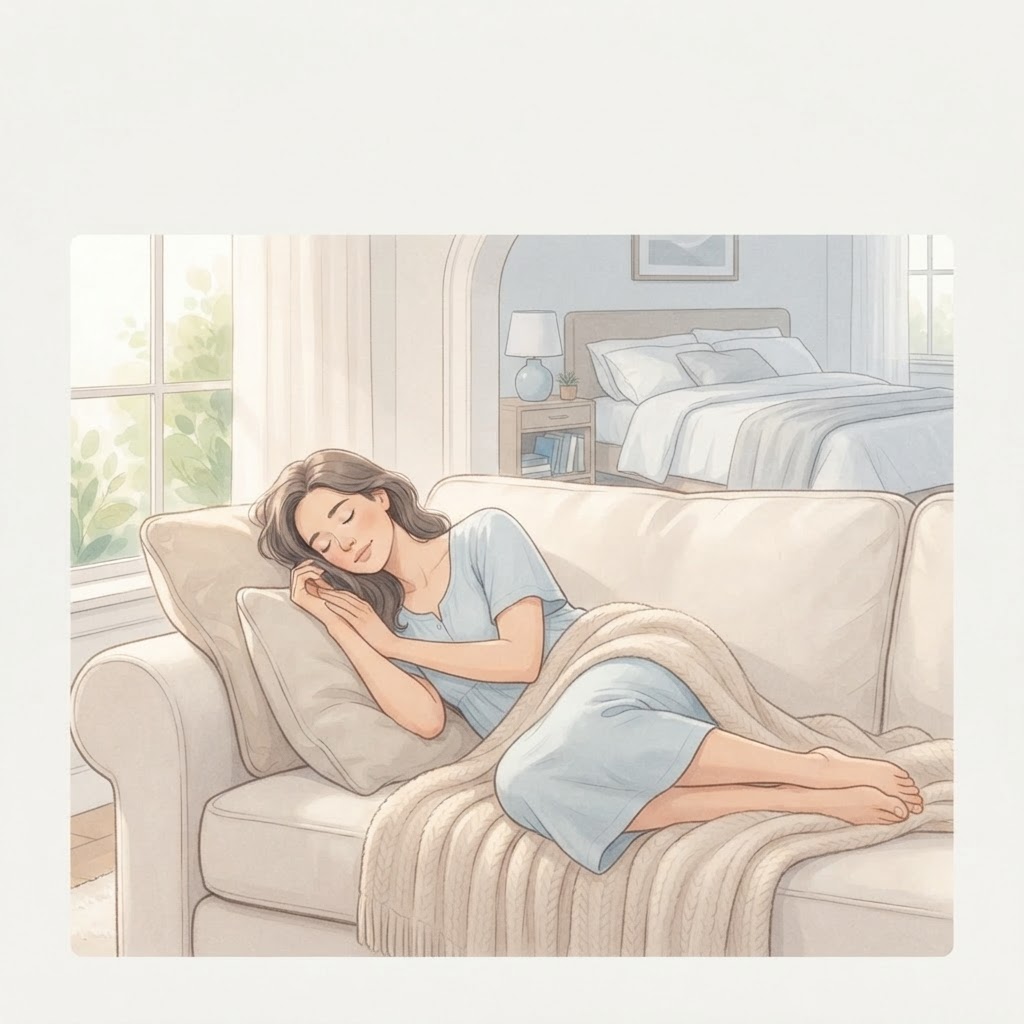
My bed feels like a place of frustration
You sleep better on the couch or in a hotel than in your own bed.
Educational information — not medical advice. Talk to your care team about what's right for you.
Overview
Common Causes
- Repeated nights of wakefulness in bed that have trained the brain to associate the bed with alertness.
- Using the bed for worrying, working, scrolling, or clock-watching rather than sleeping.
- Extended time in bed 'trying' to sleep, which reinforces the frustration association.
- Anxiety that activates the moment you enter the bedroom.
- Inconsistent sleep timing that prevents a stable bed-sleep association from forming.
What You May Be Experiencing
- Sleeping noticeably better anywhere other than your own bed.
- Feeling sleepy until you get into bed, then suddenly wide awake.
- Tension, restlessness, or frustration that appears specifically in the bedroom.
- Hours spent in bed awake, 'trying' to sleep.
- Relief when traveling or sleeping in a new environment.
Dr. Morse's Approach
Treatment Options
Stimulus control therapy — the first-line, evidence-based treatment for conditioned arousal.
Reserving the bed for sleep only, removing work and screens, and keeping a consistent wake time.
Rarely needed once behavioral treatment is in place; short-term support only if anxiety is severe.
Your Night-time Routine
A practical, step-by-step wind-down built around this concern's specific drivers. Follow it consistently for two to three weeks — rhythm, not perfection, is what resets sleep.
- 18:30 PM
Wind down outside the bedroom — read or relax in another room until genuinely sleepy.
- 2When sleepy
Get into bed. If you don't fall asleep within 20 minutes, leave the bedroom and return only when sleepy.
- 3Overnight
Same rule: if awake and frustrated after 20 minutes, leave. The bed must never be a place of struggle.
- 4Morning
Wake at the same time every day, regardless of how you slept — consistency rebuilds the association.
- 5Daytime
Do not use the bed for reading, working, or scrolling. The bed is for sleep and intimacy only.
Take this guide home
A printable PDF of this concern's full overview, routine, and treatment options.
Related Articles


When to Seek Help
Educational — Not Medical Advice
This content is provided for general educational purposes only and does not constitute medical advice, diagnosis, or treatment. It is not a substitute for consultation with a qualified healthcare professional. Submitting a question or receiving a reply does not establish a doctor-patient relationship. Always seek the advice of your physician or other qualified health provider with any questions about a medical condition, and discuss any changes to your care with your own care team.
Ready for personalized guidance?
Dr. Morse offers one-on-one and group coaching to help you move from understanding your sleep concern to changing it. Share what you're experiencing and she'll be in touch.
Request a Coaching Consultation