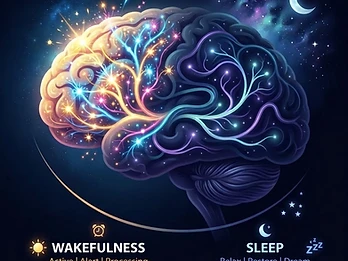
In my clinical practice, I often hear patients describe their sleep as a high-stakes waiting game. They lie awake, mind racing, while the clock ticks closer to morning, amplifying the very anxiety that prevents them from drifting off. This is the hallmark of the bidirectional relationship between anxiety and sleep—a cycle where poor sleep exacerbates anxiety, and increased anxiety further fragments sleep.

The Physiological Foundation of the Cycle
From a neurological perspective, sleep and anxiety are inextricably linked through our shared neurobiology. Both rely on the activation of the hypothalamic-pituitary-adrenal (HPA) axis. When we experience anxiety, the body releases cortisol and adrenaline, putting our system into a state of 'hyperarousal.' This is an evolutionary survival mechanism designed for immediate threat, but when it lingers at bedtime, it effectively blocks the transition into the restorative stages of sleep.
- Cortisol disruption: Persistent evening cortisol inhibits melatonin production.
- Neurotransmitter imbalance: Anxiety affects GABA pathways, which are critical for calming the nervous system.
- Circadian misalignment: Fragmented sleep often leads to irregular wake times, which destabilizes the internal clock.
Sleep is not merely the absence of wakefulness; it is an active, restorative process that your nervous system requires to effectively process emotional stressors.
Why Sleep Deprivation Fuels Anxiety
The impact of sleep loss on the brain is profound. Research consistently shows that sleep deprivation impairs the prefrontal cortex—the area responsible for executive function and emotional regulation. When this region is compromised, the amygdala—the brain’s emotional center—becomes significantly more reactive. Essentially, without adequate sleep, your brain is 'primed' to perceive neutral stimuli as threatening, which makes the experience of anxiety feel more intense and harder to manage during the day.
Breaking the Cycle: Clinically Grounded Strategies
The path to recovery is not found in a single quick fix, but in consistent, evidence-based practices that lower your baseline physiological arousal. If you find yourself trapped in this cycle, consider these foundational steps:
- Cognitive Behavioral Therapy for Insomnia (CBT-I): This is the gold-standard, first-line treatment for chronic sleep issues. Unlike general sleep hygiene, CBT-I addresses the specific cognitive habits that keep you awake.
- Scheduled 'Worry Time': Instead of letting your brain process concerns at 2:00 AM, designate a 15-minute window during the early evening to write down your anxieties. This externalizes the burden and signals to your brain that it is safe to 'switch off' at night.
- Consistency over Intensity: Focus on a stable wake time rather than obsessing over the number of hours you sleep. A consistent wake time is the most powerful anchor for your circadian rhythm.
If you have attempted these lifestyle adjustments without success, please reach out to a board-certified sleep specialist. You do not have to navigate this cycle alone, and there are effective interventions available to help you restore the quality of your rest and your life.