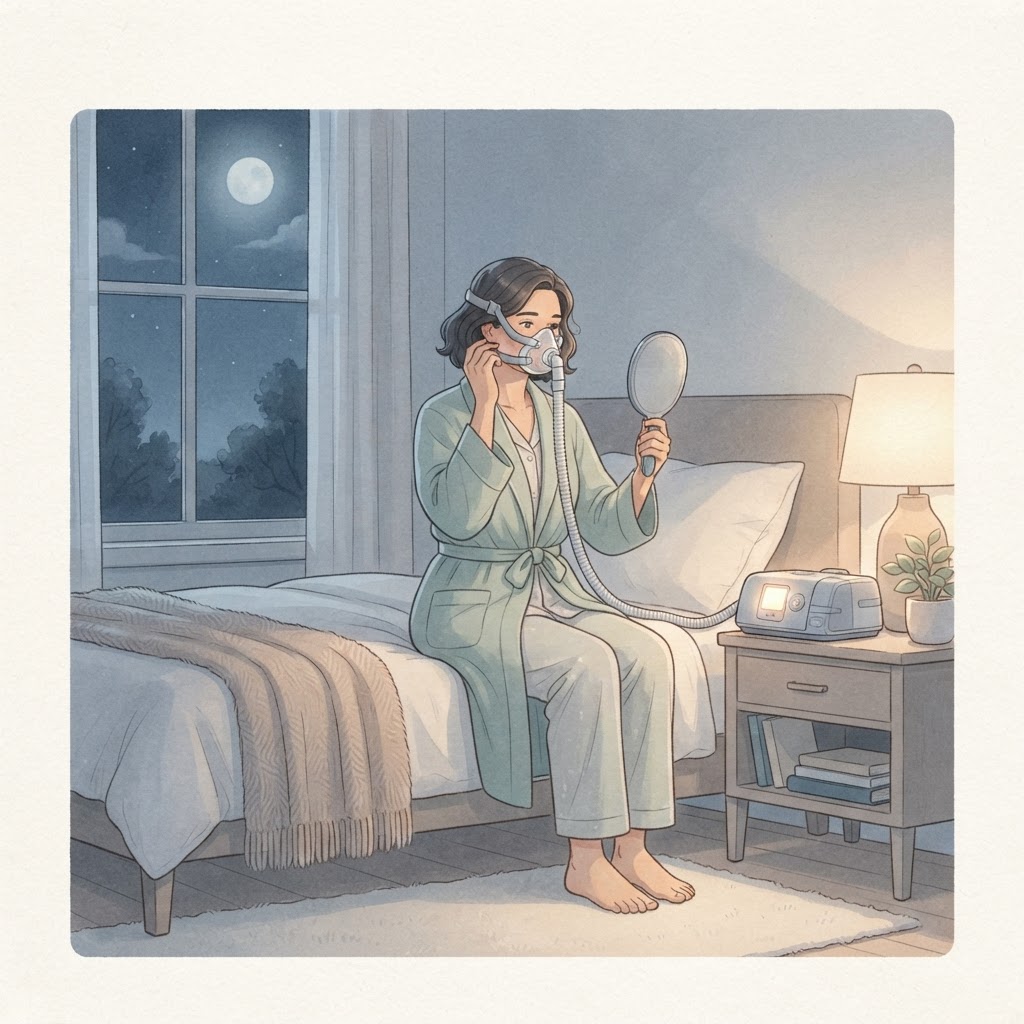
I can't tolerate my CPAP
You were prescribed CPAP, but you can't seem to make it work.
Educational information — not medical advice. Talk to your care team about what's right for you.
Overview
Common Causes
- An ill-fitting or uncomfortable mask that leaks, irritates, or feels claustrophobic.
- Pressure settings that feel too high at the start of the night, causing difficulty exhaling.
- Dry mouth, nasal congestion, or skin irritation from the mask or airflow.
- Ramp or humidity settings that haven't been tuned to the individual.
- Unrealistic expectations — the first weeks are an adjustment, not an instant fix.
What You May Be Experiencing
- Taking the mask off unconsciously during the night.
- Difficulty falling asleep with the machine on.
- Dry mouth, nasal irritation, or mask-line marks in the morning.
- Using the machine fewer nights than not, or abandoning it entirely.
- Persistent sleepiness despite 'being on CPAP' because use is inconsistent.
Dr. Morse's Approach
Treatment Options
Mask desensitization, wearing the mask awake while reading, and gradual nightly build-up.
Optimizing humidity, trying alternative mask styles (nasal, pillows, full-face), and side-sleeping.
Pressure adjustment, auto-titration modes, or evaluation for an oral appliance if CPAP remains intolerable.
Your Night-time Routine
A practical, step-by-step wind-down built around this concern's specific drivers. Follow it consistently for two to three weeks — rhythm, not perfection, is what resets sleep.
- 18:30 PM
Put the mask on while awake and read or watch something calming for 15 minutes to desensitize.
- 29:00 PM
Use the ramp feature so pressure builds gradually as you fall asleep.
- 39:30 PM
Ensure humidity is set for comfort; use a chin strap if mouth dryness is an issue.
- 410:00 PM
Sleep with the machine all night — even four hours of consistent use is meaningful progress.
- 5Morning
Check your usage data; celebrate consistency and note any issues to discuss at follow-up.
Take this guide home
A printable PDF of this concern's full overview, routine, and treatment options.
Related Articles


When to Seek Help
Educational — Not Medical Advice
This content is provided for general educational purposes only and does not constitute medical advice, diagnosis, or treatment. It is not a substitute for consultation with a qualified healthcare professional. Submitting a question or receiving a reply does not establish a doctor-patient relationship. Always seek the advice of your physician or other qualified health provider with any questions about a medical condition, and discuss any changes to your care with your own care team.
Ready for personalized guidance?
Dr. Morse offers one-on-one and group coaching to help you move from understanding your sleep concern to changing it. Share what you're experiencing and she'll be in touch.
Request a Coaching Consultation