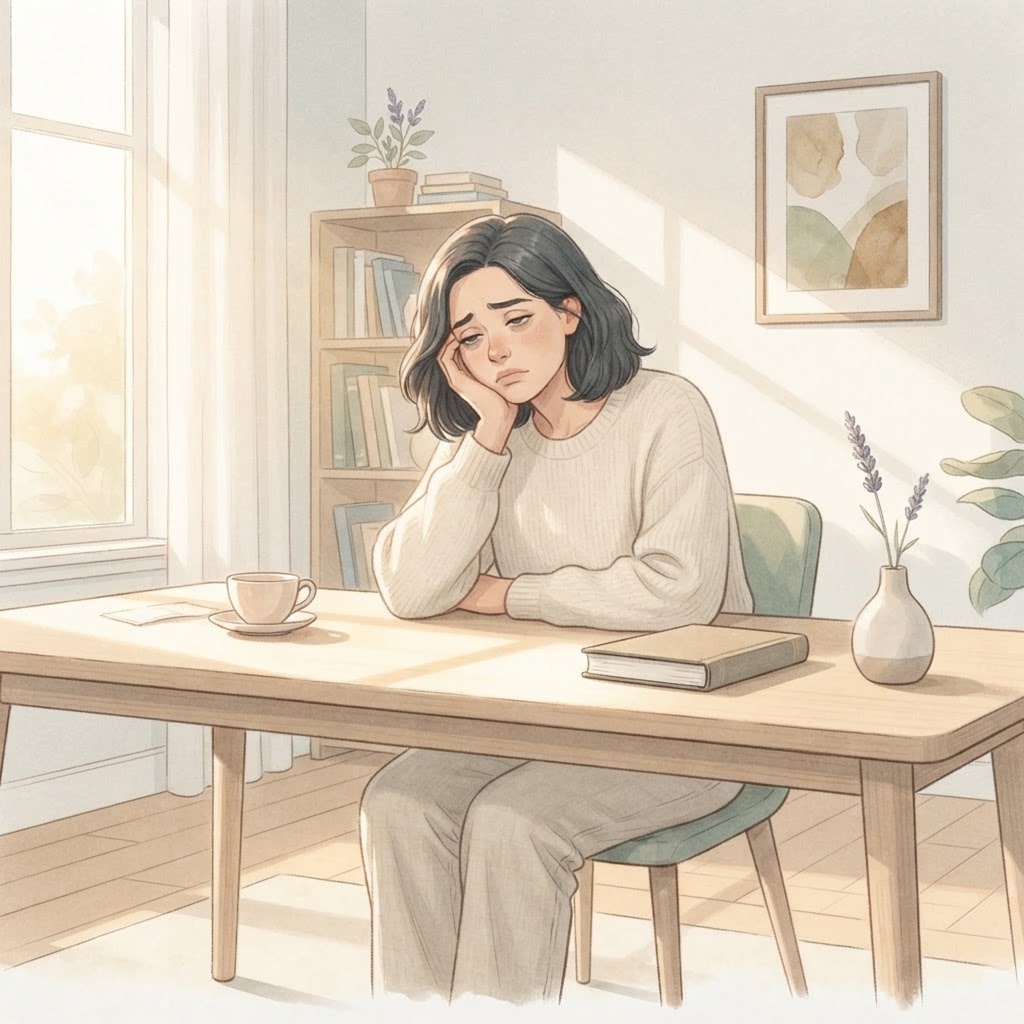
I am sleepy during the day
Persistent daytime sleepiness that interferes with focus, energy, and safety.
Educational information — not medical advice. Talk to your care team about what's right for you.
Overview
Common Causes
- Chronic insufficient sleep — the most common cause, where accumulated sleep debt quietly builds night after night.
- Undiagnosed or undertreated sleep apnea, which fragments sleep silently and leaves the brain starved of restorative rest.
- Circadian rhythm misalignment, such as shift work, jet lag, or a delayed sleep phase that pits your schedule against your biology.
- Sleep quality disrupted by frequent micro-arousals, restless legs, or periodic limb movements.
- Underlying sleep disorders including narcolepsy or idiopathic hypersomnia, where the brain's regulation of sleep and wakefulness is itself affected.
What You May Be Experiencing
- An irresistible urge to sleep during sedentary or low-stimulation moments — meetings, reading, or driving.
- Needing long naps or multiple caffeinated drinks just to stay functional.
- Difficulty concentrating, slow thinking, or memory lapses during the day.
- Irritability or low mood linked to poor daytime alertness.
- Sleep that 'should be enough' on paper but leaves you struggling to stay awake by mid-afternoon.
Dr. Morse's Approach
Treatment Options
Sleep diary and actigraphy to reveal hidden sleep debt; protected, consistent sleep-wake scheduling to restore a healthy rhythm.
Strategic napping, managed caffeine timing, bright morning light, and protecting a full 7–9 hour sleep opportunity every night.
Diagnostic sleep study when apnea, narcolepsy, or another sleep disorder is suspected, followed by targeted, evidence-based therapy for the identified cause.
Your Night-time Routine
A practical, step-by-step wind-down built around this concern's specific drivers. Follow it consistently for two to three weeks — rhythm, not perfection, is what resets sleep.
- 1On waking
Get bright outdoor light within 30 minutes of waking — it anchors your circadian alerting signal for the day.
- 22:00 PM
Last caffeine — later caffeine fragments sleep and deepens the next day's sleepiness.
- 38:00 PM
Wind-down begins; dim the lights and step away from screens so melatonin can rise.
- 49:30 PM
Protect a consistent 7–9 hour sleep window at the same time every night — sleep debt is the most common cause of daytime sleepiness.
- 510:00 PM
Lights out. If you snore, wake unrefreshed, or have been told you pause in your sleep, raise it with a clinician — sleep apnea is a hidden driver of daytime drowsiness.
Take this guide home
A printable PDF of this concern's full overview, routine, and treatment options.
Related Articles


When to Seek Help
Educational — Not Medical Advice
This content is provided for general educational purposes only and does not constitute medical advice, diagnosis, or treatment. It is not a substitute for consultation with a qualified healthcare professional. Submitting a question or receiving a reply does not establish a doctor-patient relationship. Always seek the advice of your physician or other qualified health provider with any questions about a medical condition, and discuss any changes to your care with your own care team.
Ready for personalized guidance?
Dr. Morse offers one-on-one and group coaching to help you move from understanding your sleep concern to changing it. Share what you're experiencing and she'll be in touch.
Request a Coaching Consultation