
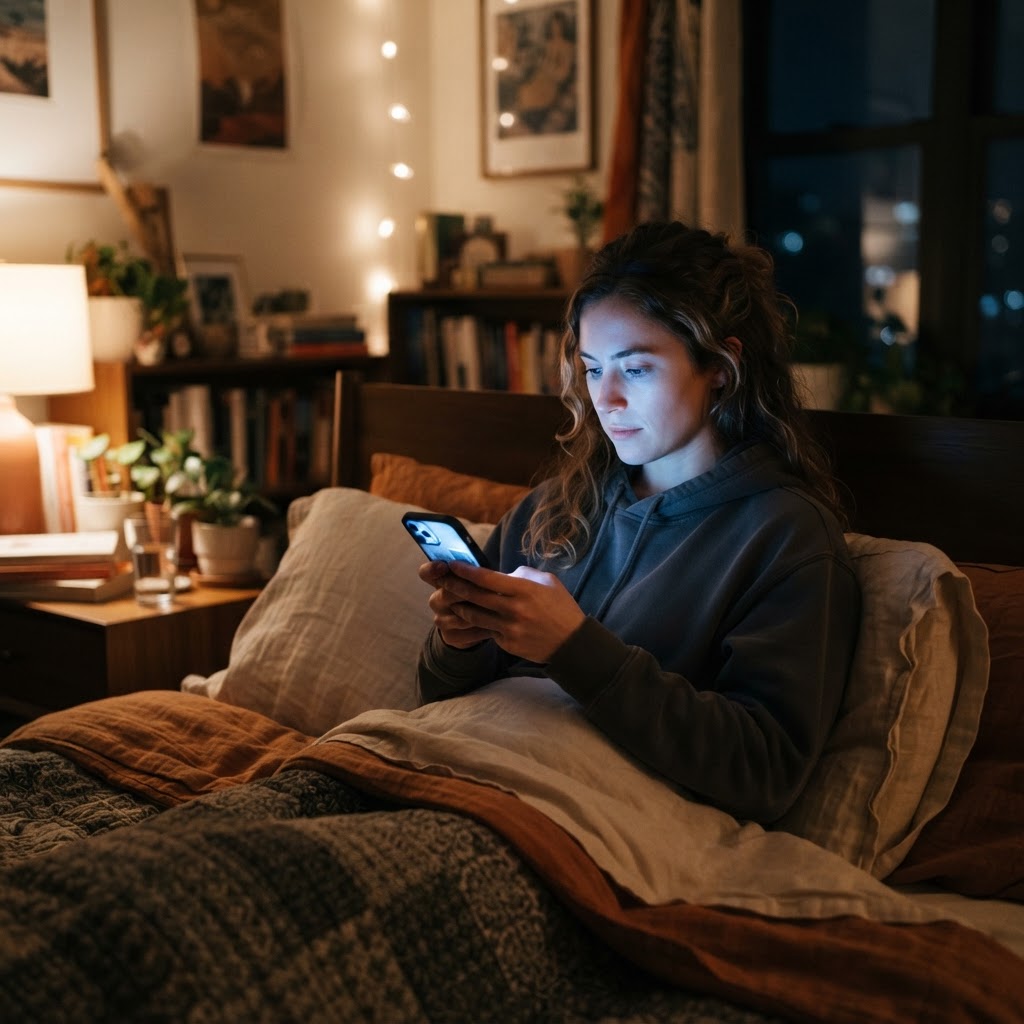
In my clinical practice, one of the most common frustrations I hear from patients is the inability to disengage from their devices at night. They aren't scrolling because they are necessarily interested in the content; they are scrolling because they feel they haven't had enough 'me time' during the day. This phenomenon, often termed Revenge Bedtime Procrastination, is a psychological tug-of-war between our biological need for sleep and our desire for autonomy.
The Psychology of the Evening Scroll
Why does the urge to scroll intensify as the sun goes down? For many, the daytime hours are dictated by professional obligations, family responsibilities, and endless to-do lists. By the time 10:00 PM rolls around, the brain perceives this as the only window of time where no one demands anything from you. It is a misguided attempt to regain control. However, this 'time theft' comes at a significant physiological cost, as the blue light exposure and cognitive stimulation delay your circadian rhythm and suppress melatonin production.
The desire for nighttime autonomy is a normal human response to a demanding life, but it is a maladaptive strategy for restoration. True recovery requires sleep, not screen time.
The Circadian Cost of Connectivity
When you delay your bedtime to scroll, you are essentially imposing a social jetlag on your own body. Sleep is not a luxury or a reward for a productive day—it is a foundational biological requirement. When we prioritize the screen over the sleep cycle, we disrupt several critical processes:
- REM and Deep Sleep cycles: These are essential for emotional regulation and physical recovery.
- Glucose metabolism: Sleep deprivation is directly linked to insulin resistance and increased cravings for high-calorie foods.
- Cognitive resilience: Lack of sleep impairs decision-making and increases the likelihood of procrastination the following day, creating a vicious cycle.
Empowering Your Wind-Down Routine
Breaking the cycle of sleep procrastination requires both compassion for yourself and a clinical approach to your environment. Start by reframing your bedtime as a non-negotiable appointment with your health rather than a sign of 'giving up' your day. Here are a few evidence-based steps to reclaim your night:
- Create a digital sunset: Set an alarm for 60 minutes before your target bedtime to physically remove devices from your bedroom.
- Schedule micro-breaks: Integrate 5 to 10 minutes of 'intentional downtime' into your workday so you don't feel the need to 'revenge scroll' at night.
- Engage in analog restoration: Swap the screen for a book, a journal, or gentle stretching to signal to your brain that it is time to transition into a rest state.
If you find that your inability to disconnect is negatively impacting your daily function, mental health, or safety, please reach out to a sleep specialist. Persistent difficulty with sleep hygiene can sometimes be linked to underlying conditions like anxiety or sleep-disordered breathing, which require clinical evaluation and support.