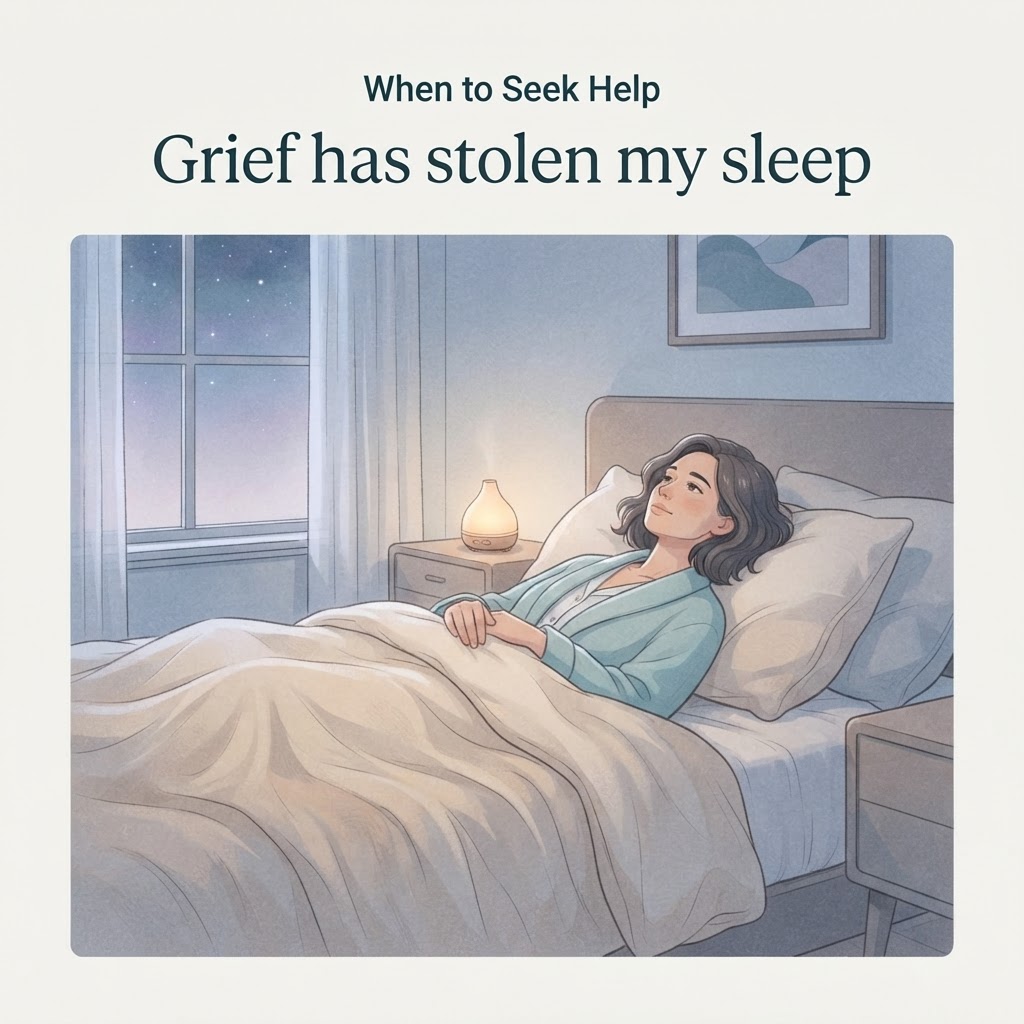
I can't fall asleep
Racing thoughts, restlessness, and difficulty transitioning into sleep.
Educational information — not medical advice. Talk to your care team about what's right for you.
Overview
Common Causes
- An overactive mind — racing thoughts, worry, or mental rehearsal of the day that refuses to quiet down.
- Irregular sleep timing that confuses the circadian rhythm, so the body isn't sure when sleep is supposed to begin.
- Evening exposure to bright light and screens, which suppresses melatonin and delays the sleep signal.
- Caffeine or stimulants consumed late in the day, with effects that can linger for hours.
- Conditioned arousal — the bedroom has become associated with frustration and wakefulness rather than sleep.
What You May Be Experiencing
- Taking more than 20–30 minutes to fall asleep on most nights.
- Feeling physically tired but mentally alert the moment you get into bed.
- Racing or intrusive thoughts that intensify when the lights go out.
- Tension, restlessness, or the urge to get up and 'do something' instead of waiting.
- Anxiety about whether you will be able to fall asleep at all.
Dr. Morse's Approach
Treatment Options
CBT-I, stimulus control therapy, and sleep restriction to rebuild the brain's association between bed and sleep.
Consistent wake time, a protected wind-down hour, dim evening light, and moving screens out of the bedroom.
Short-term pharmacologic support may be considered when behavioral therapy alone is insufficient — always under clinical supervision and never as a substitute for addressing the root cause.
Your Night-time Routine
A practical, step-by-step wind-down built around this concern's specific drivers. Follow it consistently for two to three weeks — rhythm, not perfection, is what resets sleep.
- 18:00 PM
Begin wind-down — dim the lights, stop work, and shift out of 'doing' mode.
- 28:30 PM
Take a warm shower; the post-shower drop in body temperature helps trigger sleep.
- 38:45 PM
Brain-dump journal — write down worries and tomorrow's to-dos to offload racing thoughts.
- 49:00 PM
Low-stimulation reading under warm, dim light (no screens).
- 59:30 PM
Lights out. If you're not asleep in 20 minutes, leave the bed and return only when sleepy (stimulus control).
Take this guide home
A printable PDF of this concern's full overview, routine, and treatment options.
Related Articles

Why Your Brain Feels 'Wired' the Moment Your Head Hits the Pillow
Do you find yourself wide awake the moment your lights go out? Discover the neurological reasons behind nighttime hyperarousal and learn actionable strategies to reclaim your rest.

The Sleep Procrastination Trap: Why You Can’t Stop Scrolling
Revenge Bedtime Procrastination is a common struggle in our hyper-connected world. Learn why your brain craves nighttime scrolling and how to reclaim your rest.
Menopause and Your Sleep: Managing Night Sweats and Hot Flashes
Navigating the sleep disruptions of menopause requires a blend of clinical insight and actionable self-care. Learn how to manage vasomotor symptoms and reclaim your rest.
When to Seek Help
Educational — Not Medical Advice
This content is provided for general educational purposes only and does not constitute medical advice, diagnosis, or treatment. It is not a substitute for consultation with a qualified healthcare professional. Submitting a question or receiving a reply does not establish a doctor-patient relationship. Always seek the advice of your physician or other qualified health provider with any questions about a medical condition, and discuss any changes to your care with your own care team.
Ready for personalized guidance?
Dr. Morse offers one-on-one and group coaching to help you move from understanding your sleep concern to changing it. Share what you're experiencing and she'll be in touch.
Request a Coaching Consultation