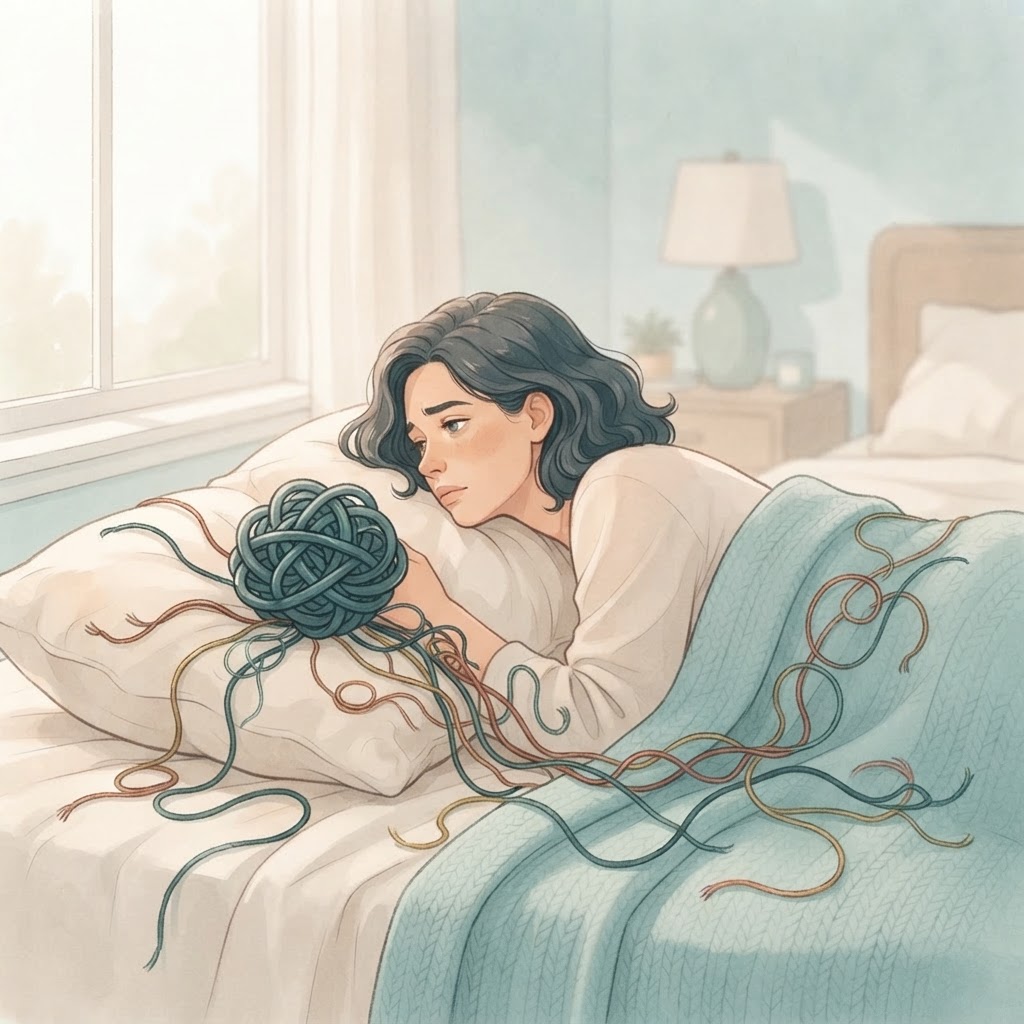
Stress keeps me awake
Daily stress has followed you into the night and won't let go.
Educational information — not medical advice. Talk to your care team about what's right for you.
Overview
Common Causes
- Chronic stress that keeps the sympathetic nervous system activated around the clock.
- An incomplete transition between work and rest, with no buffer to decompress.
- Rumination — the mind rehearsing problems and solutions when it should be winding down.
- Physical tension held in the body through the evening.
- Stress-driven behaviors — late screens, alcohol, or caffeine — that further disrupt sleep.
What You May Be Experiencing
- Difficulty falling asleep when stressed, even when exhausted.
- Waking in the night with the mind immediately back on problems.
- Physical tension — tight jaw, shoulders, or stomach — at bedtime.
- Sleep that tracks your stress level: worse in hard weeks, easier on breaks.
- Daytime tiredness compounded by poor stress recovery overnight.
Dr. Morse's Approach
Treatment Options
A protected wind-down, scheduled worry time, and relaxation practices like breathing or progressive muscle relaxation.
A buffer between work and bed, regular exercise, and reducing stress-amplifying substances.
Short-term support for stress or insomnia when behavioral strategies alone are insufficient, under clinical guidance.
Your Night-time Routine
A practical, step-by-step wind-down built around this concern's specific drivers. Follow it consistently for two to three weeks — rhythm, not perfection, is what resets sleep.
- 17:00 PM
Scheduled worry time — write down concerns and to-dos, then close the notebook for the night.
- 28:00 PM
A buffer activity that isn't goal-oriented: a walk, a bath, music, or a hobby.
- 38:45 PM
Slow breathing or progressive muscle relaxation for 5–10 minutes to downshift the nervous system.
- 49:15 PM
Screens off; warm, dim light; a calming book or audio.
- 59:30 PM
Lights out; if stress surfaces, note it on a bedside pad and return to your breath — the notebook holds it for you.
Take this guide home
A printable PDF of this concern's full overview, routine, and treatment options.
Related Articles


Why Your Brain Feels 'Wired' the Moment Your Head Hits the Pillow
Do you find yourself wide awake the moment your lights go out? Discover the neurological reasons behind nighttime hyperarousal and learn actionable strategies to reclaim your rest.


The Sleep Procrastination Trap: Why You Can’t Stop Scrolling
Revenge Bedtime Procrastination is a common struggle in our hyper-connected world. Learn why your brain craves nighttime scrolling and how to reclaim your rest.
Menopause and Your Sleep: Managing Night Sweats and Hot Flashes
Navigating the sleep disruptions of menopause requires a blend of clinical insight and actionable self-care. Learn how to manage vasomotor symptoms and reclaim your rest.
When to Seek Help
Educational — Not Medical Advice
This content is provided for general educational purposes only and does not constitute medical advice, diagnosis, or treatment. It is not a substitute for consultation with a qualified healthcare professional. Submitting a question or receiving a reply does not establish a doctor-patient relationship. Always seek the advice of your physician or other qualified health provider with any questions about a medical condition, and discuss any changes to your care with your own care team.
Ready for personalized guidance?
Dr. Morse offers one-on-one and group coaching to help you move from understanding your sleep concern to changing it. Share what you're experiencing and she'll be in touch.
Request a Coaching Consultation