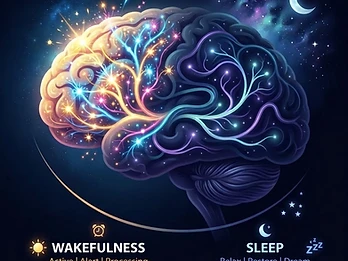
In my clinical practice, I often describe the relationship between sleep and mental health as a two-way street. We frequently focus on how anxiety or stress keeps us awake at night, but it is equally vital to recognize that poor sleep—whether due to duration, quality, or timing—can act as a significant trigger for emotional dysregulation and psychiatric challenges. Achieving restorative sleep is not merely a luxury; it is a fundamental biological necessity for neurocognitive health.

The Neurobiological Foundation of Restorative Sleep
During sleep, your brain is far from inactive. It engages in a sophisticated series of processes, including the clearance of metabolic waste products, memory consolidation, and the regulation of neurotransmitters like serotonin and dopamine. When sleep architecture is disrupted—for example, through fragmented REM sleep or insufficient slow-wave sleep—these homeostatic processes are compromised.
Quality sleep is not just the absence of wakefulness; it is the active process of restoring the brain's resilience to the stressors of daily life.
Clinical research consistently shows that sleep deficiency can decrease our threshold for frustration, heighten our reactivity to negative stimuli, and diminish our capacity for emotional regulation.
The Bidirectional Feedback Loop
The relationship between mental health and sleep is what we define as bidirectional. Consider the following cycle:
- Sleep to Mental Health: Chronic sleep deprivation can lead to irritability, increased anxiety, and even the onset or exacerbation of mood disorders such as major depressive disorder.
- Mental Health to Sleep: Psychological conditions, including generalized anxiety disorder and PTSD, frequently manifest as sleep-onset insomnia, early morning awakenings, or nightmares, which further degrade sleep quality.
Breaking this cycle requires a comprehensive approach. It is not enough to simply 'try harder' to sleep; we must identify the underlying mechanisms—whether they are physiological, such as obstructive sleep apnea, or psychological—to restore healthy patterns.
Empowering Change: Clinical Strategies for Better Sleep
Improving sleep hygiene is an essential first step, but it must be paired with clinical guidance. If you find that your sleep habits are consistently interfering with your daily functioning or mental wellness, it is time to consult with a specialist. Key strategies we often implement include:
- Cognitive Behavioral Therapy for Insomnia (CBT-I): The gold-standard, evidence-based approach to treating the psychological factors that perpetuate sleep difficulties.
- Circadian Rhythm Alignment: Ensuring consistent wake times and strategic light exposure to keep your internal clock synchronized.
- Professional Screening: Evaluating for underlying sleep disorders like restless legs syndrome or sleep apnea, which are frequently misdiagnosed as purely psychiatric concerns.
Please remember: your sleep health is a critical component of your overall medical care. If you feel stuck, reach out to a sleep medicine clinician. We are here to help you navigate the path back to restorative, transformative rest.